
- Land Clearing
- Planning Guides
Land Clearing Permit Requirements in Norman, Oklahoma
What to check, who to ask, and what to confirm before a machine ever touches your property.

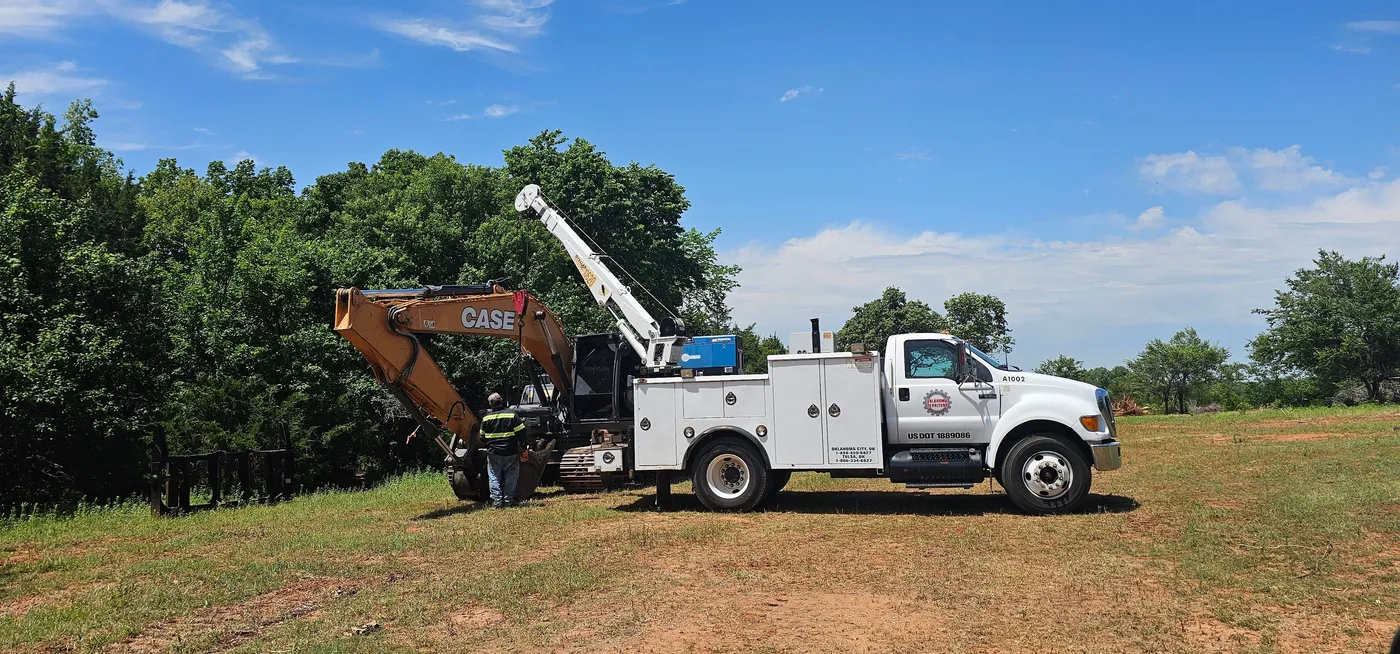
Do you need a permit to clear land in Oklahoma? Sometimes. It depends on where your property sits, what you are doing to it, and how much ground you are disturbing. There is no single statewide yes or no, and any contractor who gives you one without knowing your parcel is talking past the question.
Here is the useful version of that answer. Rules come from your city if you are inside city limits, or from your county if you are not, and they differ from one jurisdiction to the next. So the job before the job is finding out which office has authority over your dirt and asking them directly. Below is the list we run through with landowners in Norman, across Cleveland County, and everywhere else we work, so you know what to check and who to ask before the machines roll in. Treat every item here as a category to verify, not a rule we are stating for your property.
Do you need a permit to clear land in Oklahoma?
The honest answer is that it depends, and the person who can tell you is not us. It is your city or county planning and permitting office.
What we can tell you from doing this work since 2015 is that the question almost never comes back as a simple yes or no. It usually comes back as several smaller questions: is the parcel inside city limits, is any part of it in a mapped floodplain, how much ground is being disturbed, is there an easement crossing it, and is the clearing tied to a build that has its own approval path. Different answers pull in different offices.
Landowners get in trouble when they assume rural means unregulated. Sometimes it does mean fewer requirements. Sometimes there is still a floodplain, a utility easement, or a drainage question sitting on the property that nobody looked at. Five phone calls before you clear are cheaper than one stop-work conversation after.
Step one: city limits or unincorporated county?
This one determines everything else, and it is the first thing to settle.
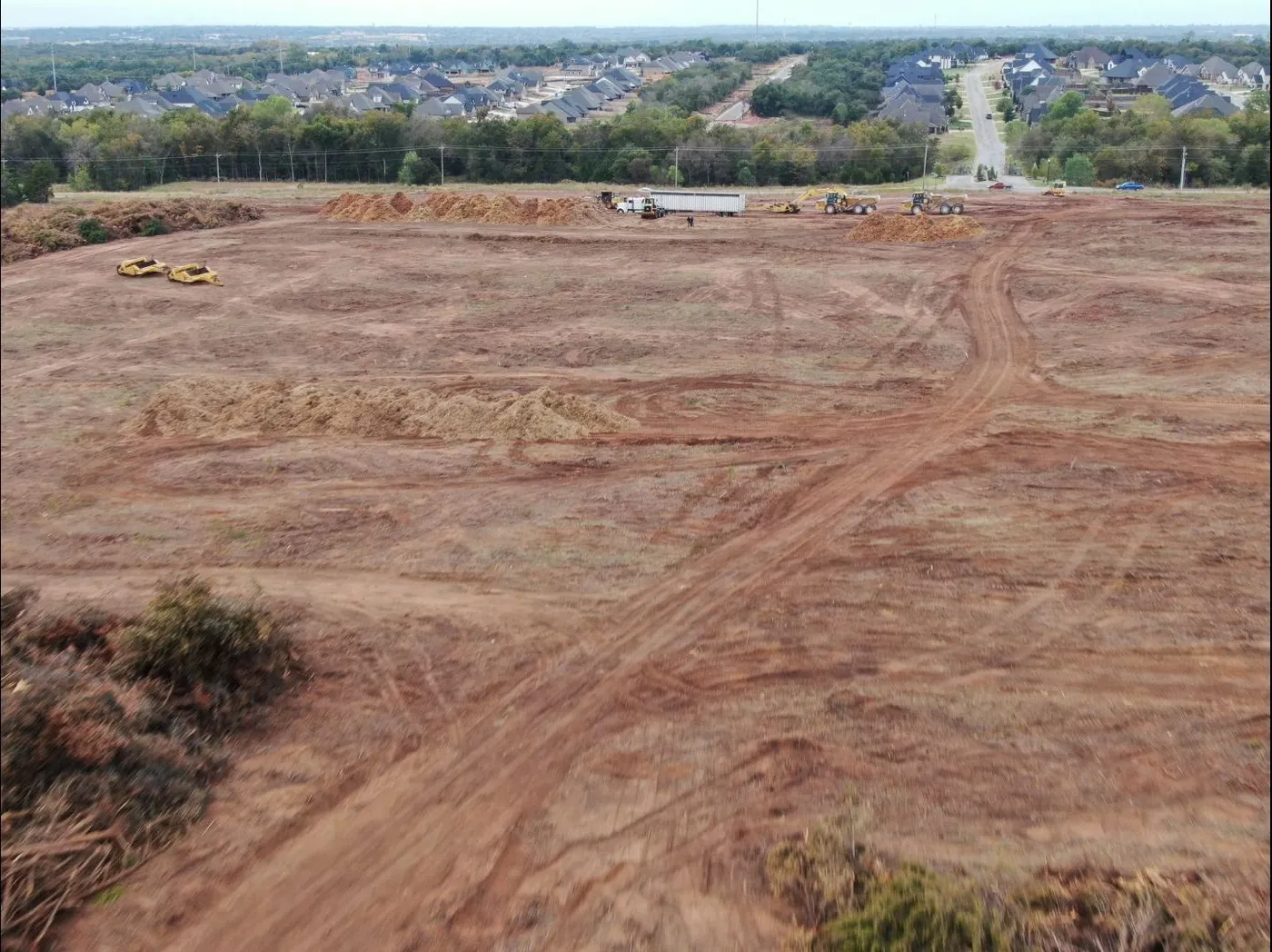
If your land is inside a city, the city has authority and the city is who you call. If it is in unincorporated county, the county does. That sounds obvious until you are standing on a piece of acreage on the fringe of a growing town, where the line has moved over the years and the mailing address does not match the jurisdiction. We see it constantly on the outer edges of the metro. A Norman mailing address does not automatically mean the parcel is inside Norman city limits, and plenty of Cleveland County acreage sits outside any city at all.
If the parcel is inside the city, the City of Norman has a permits and licenses section and a planning and community development department, and that is where the conversation starts. If it turns out to be unincorporated, call Cleveland County directly and ask for planning or zoning. Either way, describe the property and the actual work you want done, because the answer changes with both.
Two ways to settle it fast:
- Look your parcel up through the county assessor’s property records and check the jurisdiction listed.
- Call the city planning or development office, give them the parcel number or address, and ask point blank whether you are inside their limits.
Once you know who has authority, ask that office one clean question: “I am planning to clear vegetation and trees on this parcel. What approvals or permits apply, and is there anything about this property I should know first?” Write down who you talked to and what they said.
Call 811 before anything digs, grubs, or grades
This one is not jurisdiction-specific. Calling 811 to get underground utilities located and marked before you dig is standard practice everywhere in the country, and it costs nothing. In Oklahoma the one-call center is OKIE811, and you can file a locate request there or by dialing 811. Locate requests are valid for a limited window and can be scheduled a few business days ahead, so put the call in during planning rather than the morning the machines arrive.
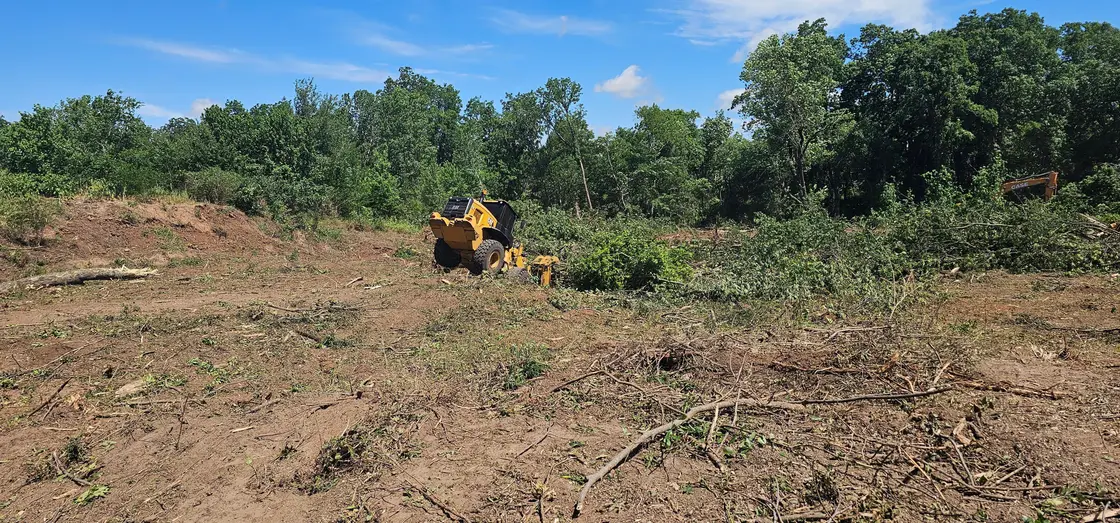
People sometimes think clearing does not count as digging. It depends on the method. Surface mulching a stand of cedar leaves the ground alone. Grubbing does not. The moment you are processing stumps and root balls out, or cutting grade, you are in the dirt, and buried gas, water, electric, and fiber do not announce themselves. Rural runs are often shallower and less documented than people expect, and old farm lines almost never show up on anything.
We do not put a machine in the ground on a job until locates are marked. If your contractor is not asking about this, that tells you something about how they work.
Clearing near a creek, a pond, or a floodplain draws extra scrutiny
Work in or near water, drainage ways, and mapped floodplain generally gets a closer look from whoever has authority, and that is the category landowners most often miss.
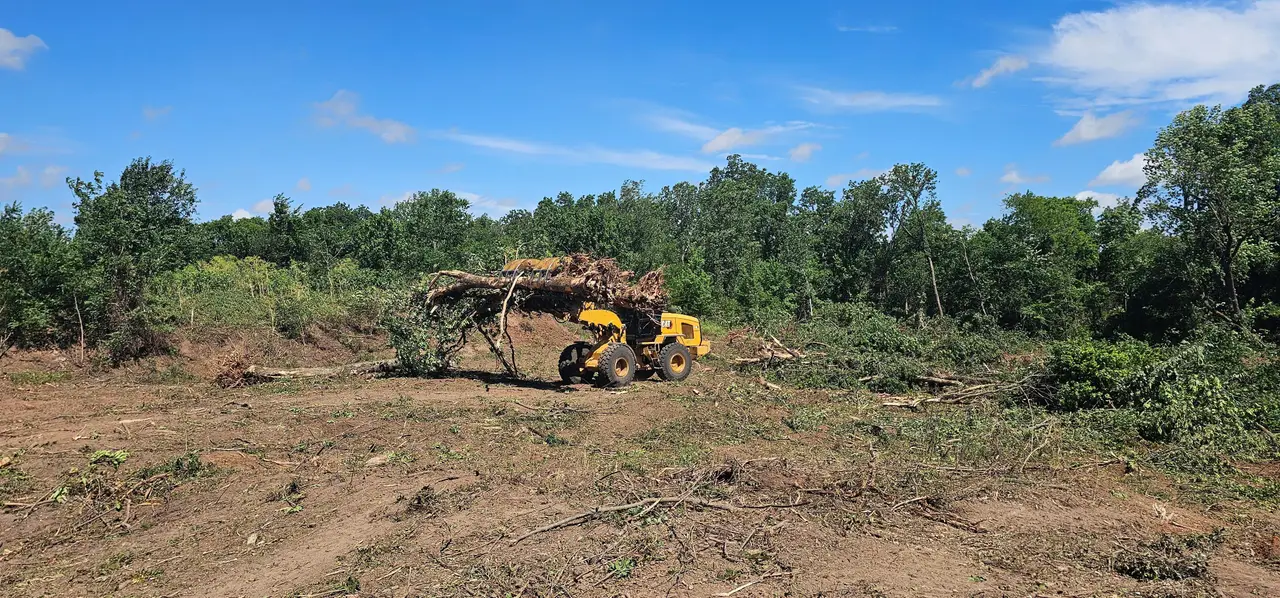
The reason it gets missed here is that Oklahoma water hides. A draw that is bone dry and full of brush in August is a moving channel three hours into a spring storm. Red clay does not absorb much once it is saturated, so water runs instead of soaking in, and ground that looks like nothing on a walk-through in summer behaves very differently in May.
If any part of your property touches a creek, a pond, a drainage easement, or low ground that carries water when it rains, ask your city or county whether that area is regulated and what applies before you clear it. Ask about the floodplain map specifically. That is a two-minute question with a real answer, and it is a lot easier to ask before the trees are down.
You can also look your own address up first. The FEMA Flood Map Service Center is the official public source for flood hazard maps and lets you search by address, so you can see whether mapped floodplain touches your parcel before you ever pick up the phone. Knowing the answer going in makes that call to the city or county a lot shorter.
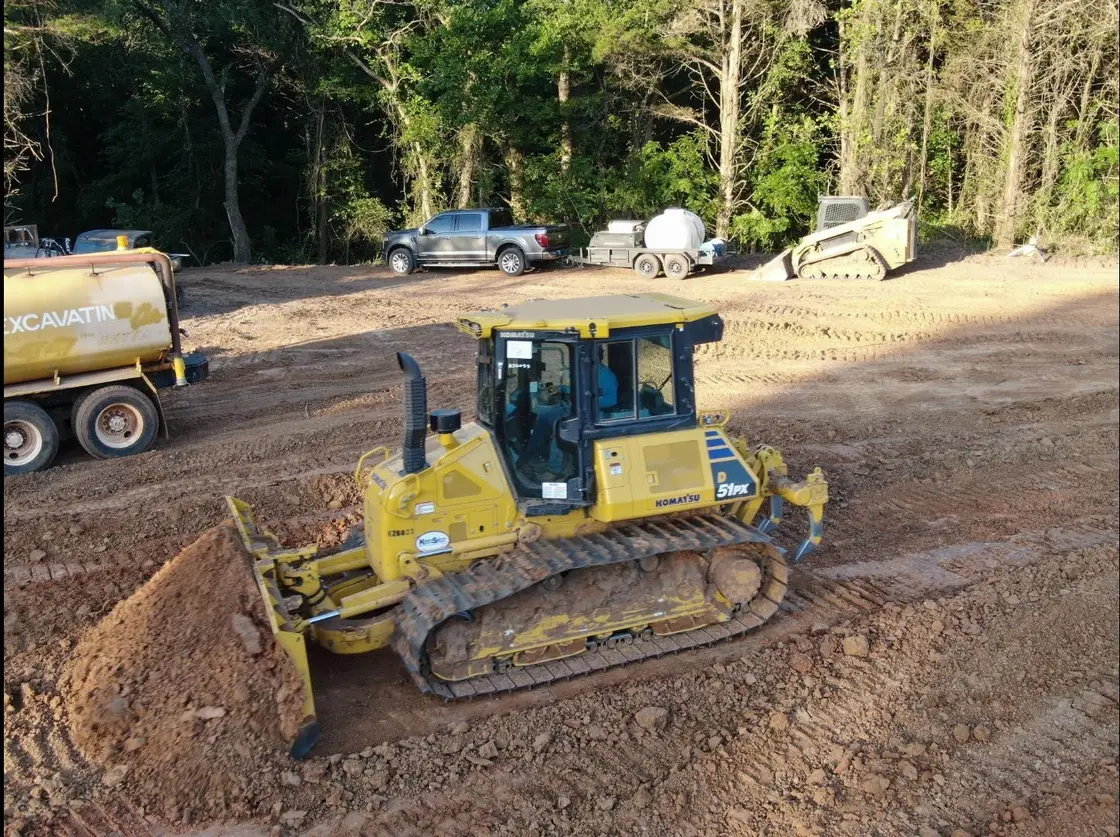
Burn bans, and why we clear mechanically instead of burning
Burn restrictions in Oklahoma move with the weather and vary by county. What was allowed last month may not be allowed this week, and a landowner who planned the whole project around burning a pile ends up stalled out.
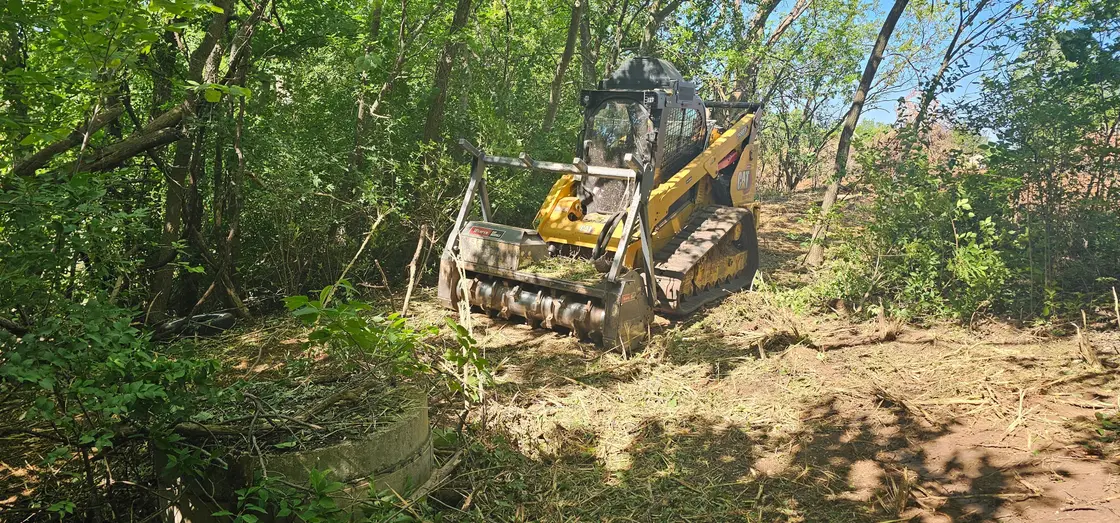
We clear mechanically, so this is not something our clients wait on. Forestry mulching grinds standing brush and small-to-medium timber into a mulch layer right where it stood, no pile and no smoke. Heavier material gets worked, stacked, and hauled where the job calls for it. Cedar is a good example: it has spread hard across pasture all over central Oklahoma, and mulching handles it in a single pass without ever needing a match.
If you are set on burning, that is a question for your county before you start, every time, because the conditions change. Oklahoma Forestry Services, the division of the Oklahoma Department of Agriculture, Food and Forestry responsible for wildland fire, publishes current burn ban status and fire danger information, which is the place to look before you assume anything. We would rather build you a plan that does not depend on the answer.
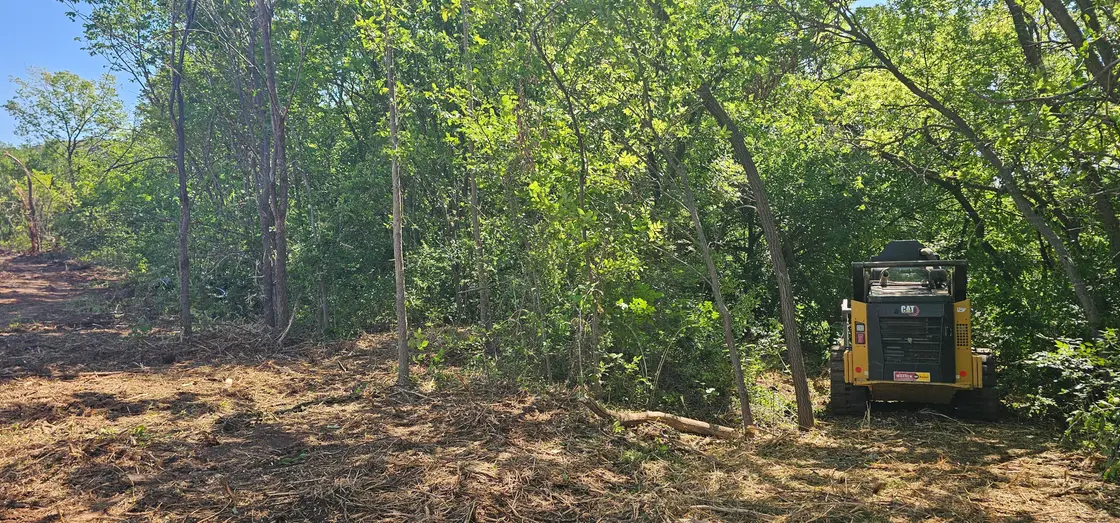
Larger disturbed areas can bring soil and stormwater requirements into play
Once a project disturbs enough ground, there are typically requirements around soil and stormwater that can land on the owner, the contractor, or both. Where that line sits, what it is called, and who is responsible are all things to verify for your specific project and jurisdiction. We are not going to guess at a threshold for you, because guessing at that is exactly how people get it wrong.
In Oklahoma, construction and stormwater permitting sits with the Oklahoma Department of Environmental Quality, whose Water Quality Division handles construction and stormwater permits. If your project is large enough or tied to a development, that is the agency whose requirements you or your engineer need to confirm. We are not going to tell you which of their permits applies to your job, because that depends on details only they and your project team can settle.
What matters practically: if you are clearing a large tract, or clearing as part of a development or a build, ask early whether anything of this kind applies and who is expected to handle it. Get that settled during planning rather than mid-job. It affects sequencing, and sequencing affects cost.
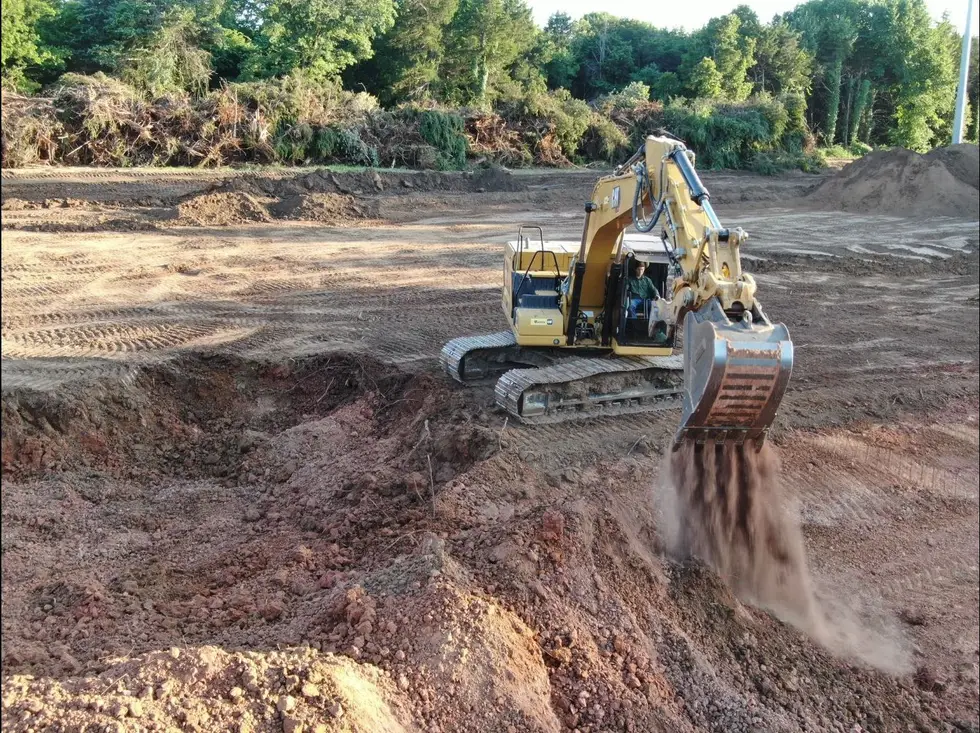
Easements, right-of-way, HOA rules, and deed restrictions
Not every limit on clearing your land comes from a government office. Some of them come with the deed.
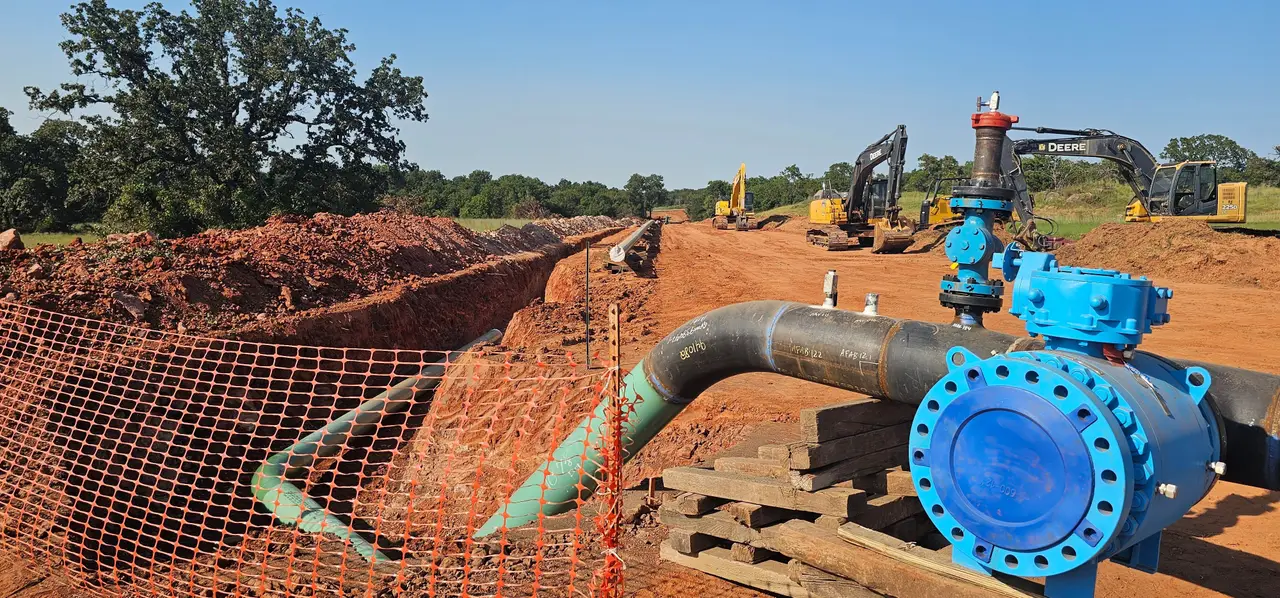
- Utility easements and right-of-way. You may own the ground and still not be free to do what you want inside a recorded easement. Utility and pipeline easements come with terms, and clearing, grading, or stacking material inside one can be a problem. Check your title work and survey for what crosses the property.
- Access and shared drives. Easements for a neighbor’s access are common on rural acreage and often unmarked on the ground.
- HOA rules and platted subdivisions. On a platted lot, tree removal is sometimes restricted by the HOA or the plat itself, including specific trees or buffer areas along the frontage. Executive acreage and estate lots around Norman and elsewhere in the metro frequently have language like this.
- Deed restrictions and covenants. These follow the land regardless of who owns it. Read them before you plan the clearing, not after.
Your title company, your survey, and your HOA documents answer most of this. If a document is unclear, that is a question for an attorney, not for a contractor.
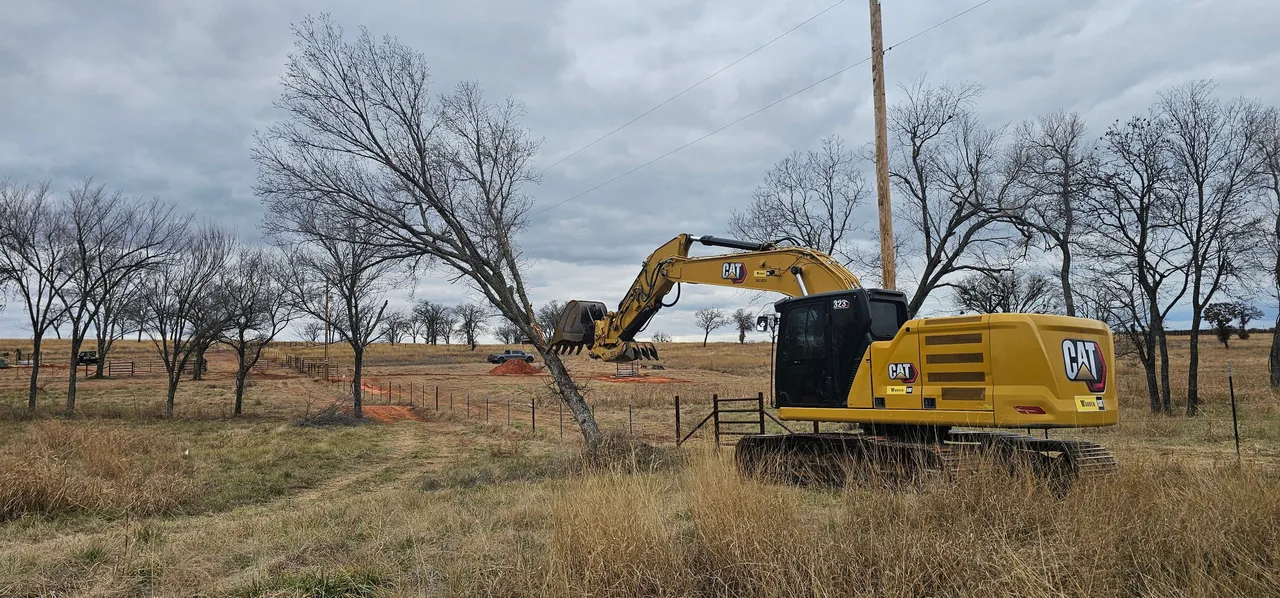
Find your septic, your well, and your property pins first
Machines are heavy and they do not know what is under them. Before we work a rural tract, we want to know where these are:
- Septic tank and lateral field. Driving a loaded machine across a lateral field is an expensive mistake, and the field is usually invisible from the surface.
- Water well and any lines running from it. Old lines in particular tend to be undocumented.
- Property pins and corners. If your pins have not been located, know your true boundary before anything comes down. Clearing a neighbor’s trees is not a fixable error.
- Old wells, storm shelters, cisterns, and buried tanks. Common on Oklahoma farmsteads and rarely on any drawing.
If you do not know where these things are, say so up front. It is much better to slow down for an hour and locate them than to find them with a machine.
What we flag on the free walk-through
The permitting conversation goes better when the contractor is part of it early, because we notice things on the ground that do not show up on paper.
When we walk a property for an estimate, we are reading the job: density, tree size, terrain, access, and haul-off, the things that set the price. He is also reading the flags. Utility markers and pedestals. A drainage way running through the back of the tract. A fence line that does not match where the pins probably sit. Ground that has clearly held water. A stand of blackjack and post oak dense enough that the haul-off question changes the whole plan. When something on the property looks like it needs a phone call to the city or county before we start, we tell you then, while there is still time to make the call.
That is where the walk-through earns its keep. You get a firm number on the work, and you get an honest list of what to confirm before we mobilize. What we do not do is tell you what is permitted. That is not our call to make.
Your pre-clearing checklist
Run this before you schedule work on any Oklahoma property:
- Confirm whether the parcel is inside city limits or in unincorporated county.
- Call that office, describe the work, and ask what approvals apply.
- Ask specifically about floodplain, creeks, and drainage on your parcel, and look your address up on the FEMA Flood Map Service Center first.
- File a locate request with OKIE811 and get utilities marked.
- Pull your survey and title work; look for easements and right-of-way.
- Check HOA rules, plat notes, and deed restrictions if the lot is platted.
- Locate septic, lateral field, well, water lines, and property pins.
- Check Oklahoma Forestry Services and your county for current burn conditions if burning is part of anyone’s plan.
- Walk the property with your contractor and get the flags on the table.
- Keep notes: who you spoke with, what they said, and when.
Ten steps, most of them phone calls, and they cost you nothing but an afternoon.
What clearing will cost, and where to start
We do not publish per-acre pricing, because a firm number depends on what is actually on your ground: acreage, tree and brush density, terrain, access, and how much material has to be hauled off. Our breakdown of land clearing cost per acre walks through each of those drivers if you want to understand a quote before you get one. If your project is headed for a foundation, site preparation and grubbing belong in the budget from the start, not as an afterthought once the trees are down.
We work across the OKC metro and out to about 150 miles, including Norman, Moore, Edmond, Yukon, and the surrounding counties. You can see the full list on our service areas page, and our land clearing page covers how we approach the work itself.
One last thing, and we want to be plain about it: we are a land clearing contractor. We are not a permitting authority, a code office, or a legal advisor, and nothing in this article is legal advice or a statement about what is required on your specific property. Requirements vary by city and by county and they change. Your city or county is the source of truth, and confirming with them before work starts is on the landowner.
Once you have made those calls, we are ready to walk the land. Call (405) 465-2809 or request a free estimate and we will scope the real job on-site, flag what we see, and give you a straight number.