
- Storm Cleanup
- Land Clearing
Storm Debris Cleanup on Edmond, Oklahoma Acreage
Who clears downed timber and debris off acreage after an ice storm or straight-line winds, in what order the work has to happen, and why the ground decides the schedule.

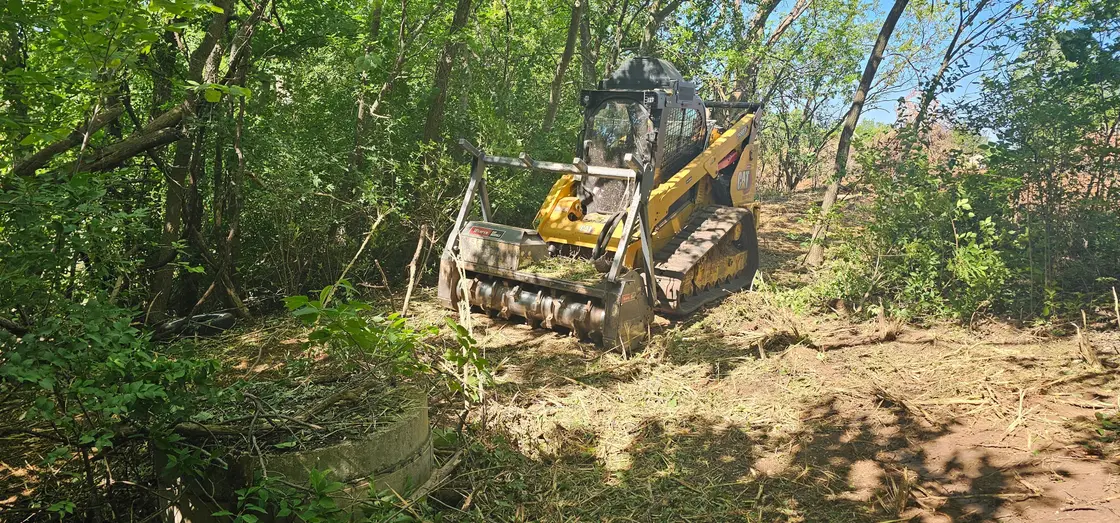
If a storm just went through your acreage and you are wondering who cleans up fallen trees and debris on a property this size, the short answer is a land clearing contractor with heavy equipment, not a tree service and not a hauling company. Tree services are built to take a tree off a house in a tight yard. Haulers are built to take away a pile someone else already made. On five, ten, or forty acres, the problem is that the material is spread across the whole place and something with tracks has to go get it.
The other honest answer is that the ground decides when the work starts. In central Oklahoma the storm that knocked your timber down also soaked the red clay under it, and driving loaded equipment across a wet pasture is how you turn a cleanup job into a cleanup job plus a repair job. Below is how we work a storm property, in what order, and where the real costs hide.
What makes storm cleanup different from a normal clearing job
Regular land clearing is almost tidy by comparison. The timber is standing where it grew, we know which way it comes down, and we work in a line across the tract. Storm work is the opposite of organized.
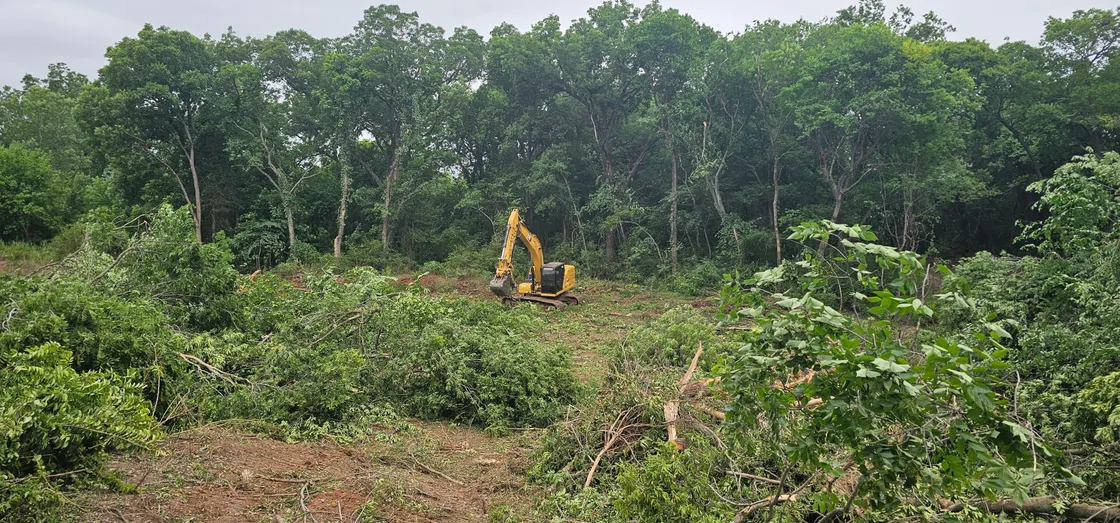
Here is what is actually different once we are on the property:
- The material is scattered, not standing. Trees are down across fence lines, on top of each other, and pointed in whatever direction the wind was going. Every piece has to be reached, cut free, and moved to somewhere a machine can work it.
- Everything is under tension. A trunk lying across another trunk is a loaded spring. So is a bent sapling pinned under a limb. That is the part that hurts people.
- Hazards are hidden. Barbed wire wrapped in a downed cedar, a T-post buried in brush, an old well cover, a septic lid, a lateral line under a root ball. After an ice storm, a whole layer of broken limbs sits under the debris where nobody can see it.
- Root balls leave holes. Blackjack and post oak that blow over take a wad of red clay with them and leave a crater beside a wall of dirt and roots. That is two problems, not one.
- The volume is bigger than it looks. Standing timber is compact. The same trees on the ground with the tops broken out cover several times the footprint, and volume is what drives grinding or haul-off.
- The ground is soft. Storm damage and saturated soil arrive together, every time.
Leaning trees and hangers are not a chainsaw job
This is the part where we will talk you out of work you might have been planning to do yourself.
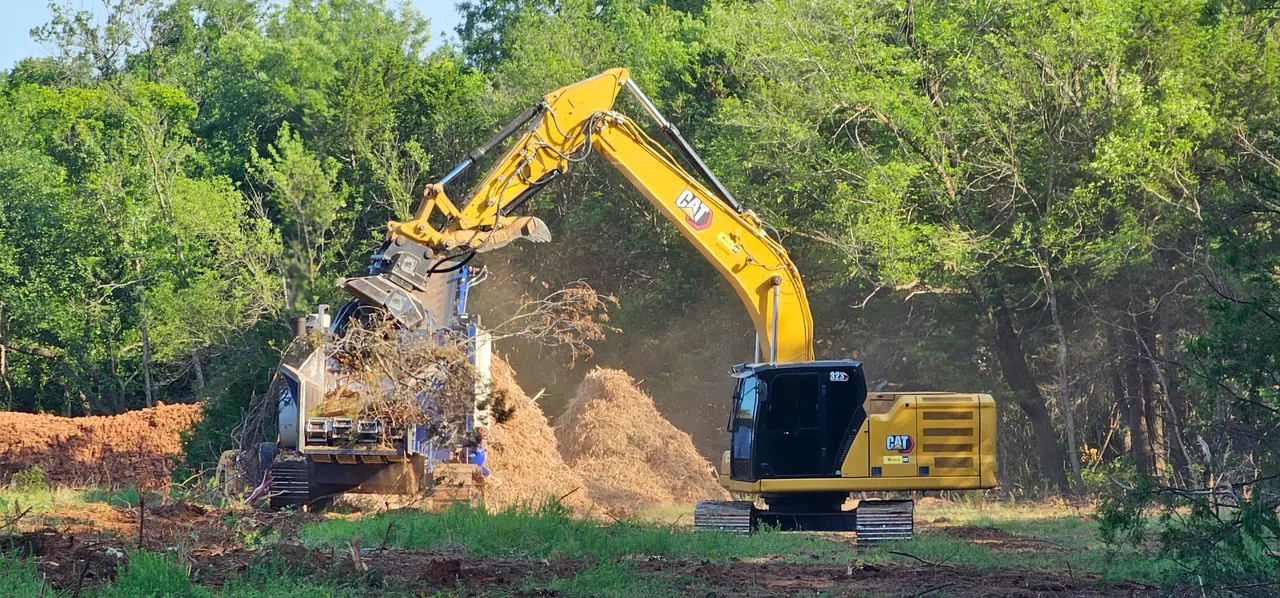
Limbs lying loose on the ground are fine to handle with a saw and a truck if you are comfortable with one. What is not fine is anything still holding its own weight in a way you cannot predict:
- Leaners. A tree that is partly uprooted and resting against something else is carrying load through the trunk. Cut it in the wrong place and it does not fall, it swings or it barber chairs up the stem.
- Hangers. Broken tops hung up in the canopy overhead. They come down on their own schedule, usually with the next gust, and they are the single most common way people get hurt in storm cleanup.
- Uprooted trunks with the root plate still attached. Cut the trunk and the root wad can stand back up and drop into the hole with you next to it.
- Spring poles. Small trees bent double under bigger timber. They release fast and at head height.
Our answer to all four is the same: put a machine and an operator between the person and the load. Equipment can push, pull, hold, and cut from a distance with the operator behind glass. Nobody stands under a hanger with a saw over their head. If you take one thing from this article, take that one.
Before anything gets moved, it is generally worth walking the property with your phone and photographing the damage from a few angles. We are not insurance people and we do not handle claims, but photos cost nothing to take and you cannot go back and get them once the ground is clean.
The order we work a storm property in
Every storm job runs in the same four stages, and doing them out of order is how cleanups get expensive.
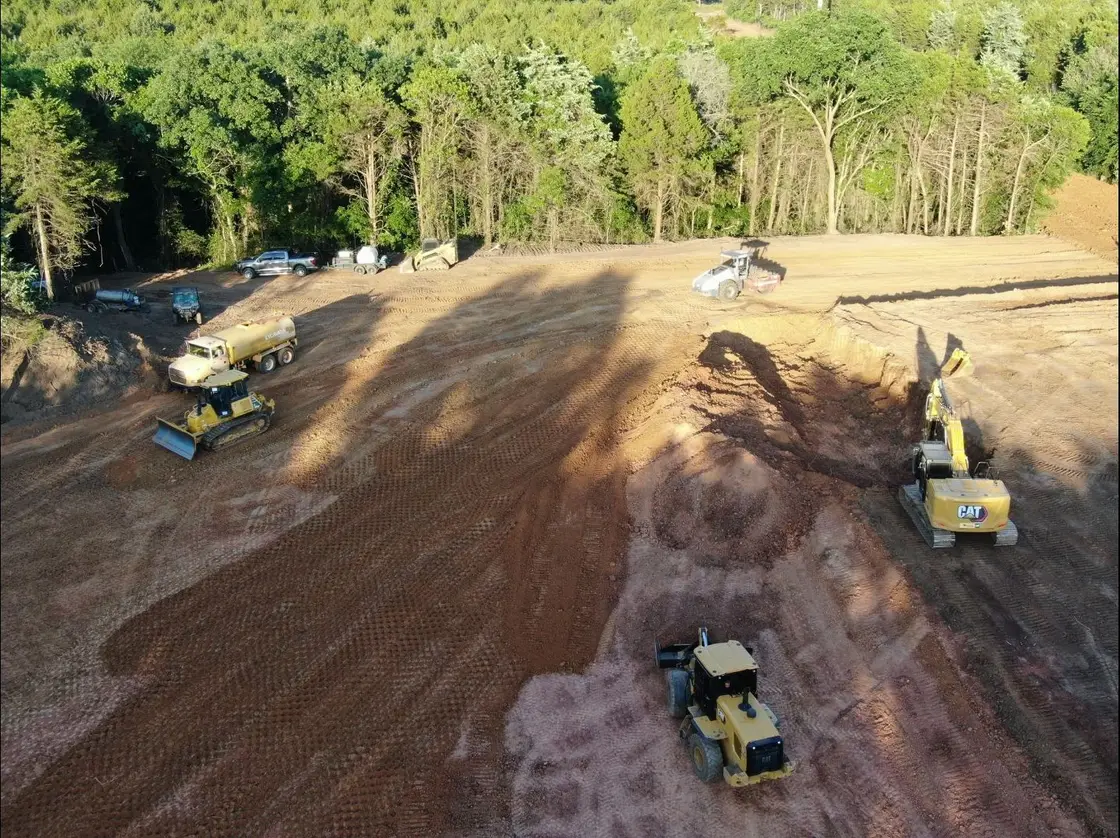
- Make it safe. Drop the leaners, bring down the hangers, and relieve anything under tension. Nothing else happens on the property until this is finished. If a tree is against a house, a barn, or a power service, that is a same-visit item and we coordinate around it.
- Open access. Clear the driveway, the lane to the barn, and a path the equipment can loop on. On north Edmond acreage that usually means one long entry drive and a couple of interior two-track lanes, and if those are blocked, nothing productive can start.
- Gather and work the material. Cut, drag, and consolidate the downed timber to places a machine can process it, then either grind it in place or load it out. This is the longest stage and the one that sets the bill.
- Put the ground back. Pull and break up root balls, fill the craters, knock down the ruts we made, and re-grade so the pasture drains the way it did before. This is the stage everybody forgets to budget for.
A crew that skips straight to stage three because it looks like progress will leave you with a clean pasture full of holes and a hazard tree still leaning over the shop.
Wet red clay, and why waiting a week can save you money
Central Oklahoma clay has two settings. In August it is close to concrete. After three inches of rain it is soup, and it stays soup a lot longer than the top surface suggests.
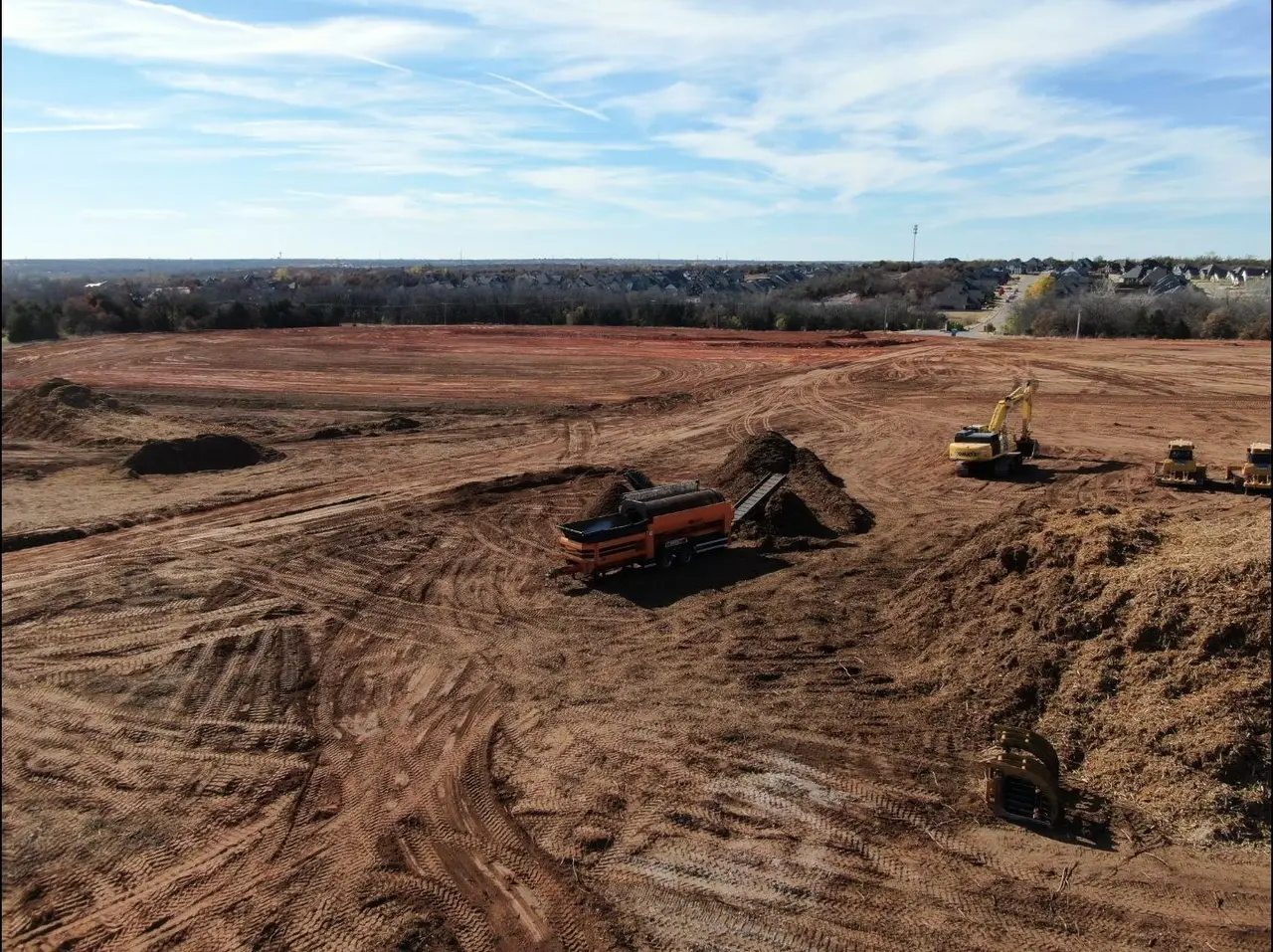
Here is the honest trade-off, and it is one that costs us work: on most storm jobs, the cheapest thing you can do is wait. Running a loaded machine across saturated pasture cuts ruts eight to twelve inches deep, pumps the clay into a mess that will not dry, and kills the grass in every track. Then somebody has to come back with a dozer and re-grade all of it, which is real hours you would not otherwise be paying for. Give the ground five to ten dry days and the same machine floats across on top instead of sinking in, and the job comes in smaller.
The exceptions are worth naming, because they are the reason to call immediately instead of waiting:
- A tree is on a structure, a vehicle, or a power service.
- Your driveway or the only route to livestock and water is blocked.
- Something is leaning over a place people walk.
- Livestock are getting out through downed fence.
Those get handled now, wet ground or not, and we accept the ruts as part of the cost. The rest of the property can sit a week. When you call, tell us which of those apply and we will tell you straight whether it is a today problem or a next-week problem.
What happens to all that material
Once the property is safe and open, the question becomes what to do with several hundred tons of tree. There are two real answers and most jobs use both.
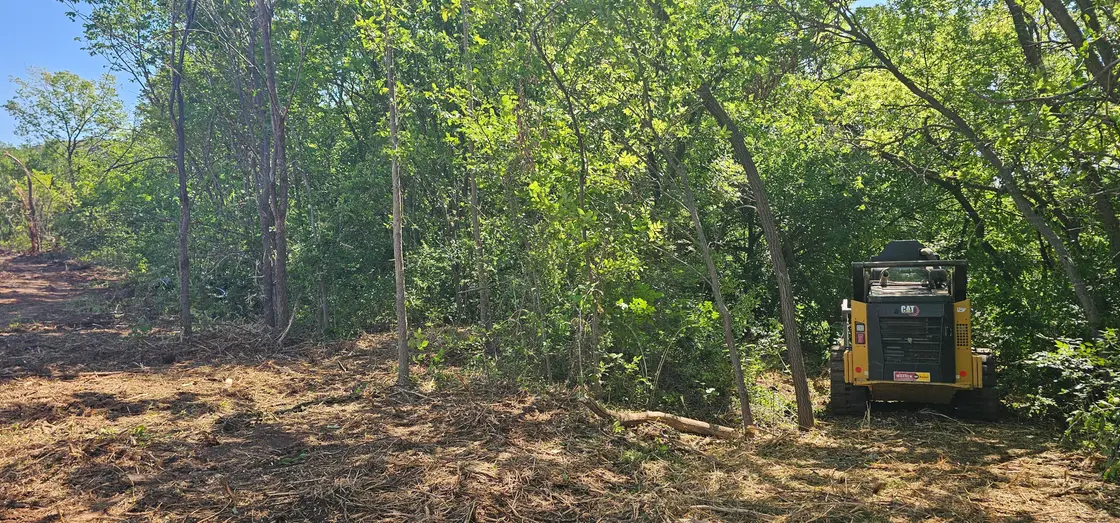
Grind it on site. Forestry mulching and grinding turn the limbs, tops, and smaller trunks into a mulch layer right where they lie. Nothing gets trucked, which is usually the cheaper route, and the mulch holds the soil while your grass comes back through it. This works well on the brushy half of a storm mess: cedar, brush, and the broken tops that make up most of the volume after an ice storm.
Haul it off. Full clearing and removal makes sense when you want the pasture actually clean, when the volume is more than the ground can absorb as mulch, or when the material got dragged through dirt and old fence wire and is not worth putting a grinder head into. Haul-off adds trucking, so it moves the number, and it is usually the biggest single swing on a storm quote.
Which one fits depends on what you want the ground to do next. Pasture you plan to mow and graze can live with a mulch layer. A spot where you intend to build a house or a shop cannot, and that ground needs grubbing and site preparation instead of a mulch blanket over the top of it.
Root balls leave holes, and the ground has to be put back
An uprooted tree is the most annoying single item on a storm property. One blackjack that blew over gives you a crater, a several-thousand-pound wad of roots and red clay standing on edge, and a trunk to deal with, all in the same spot.
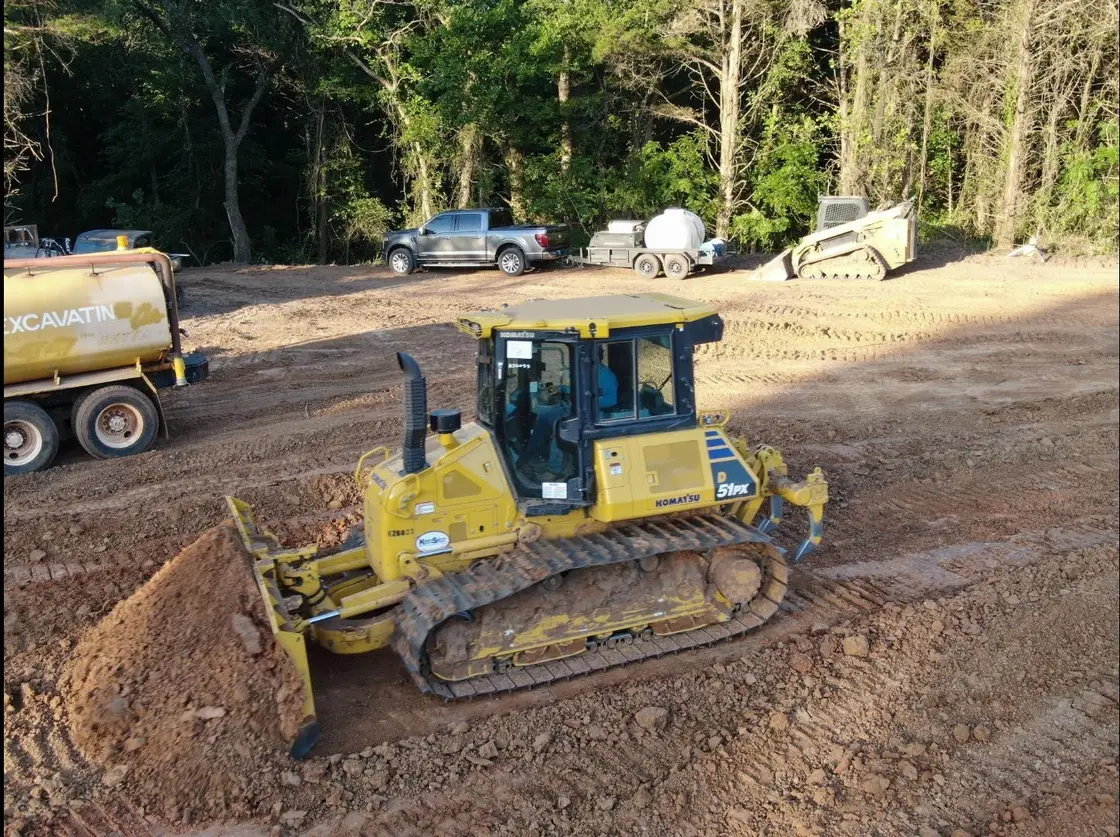
Left alone, that pair does not fix itself. The hole becomes a wet low spot that holds water every spring. The root wad rots down over years and leaves a hump you cannot mow across. If the tree came out near a lane or a pad, the voided ground under it will settle later, and you would rather find that out now than after a slab is poured.
What we actually do: pull the root ball with an excavator, shake and break the dirt out of it so you are not hauling your own topsoil away, then push the ground back into the hole and re-grade it flat enough to mow and to drain. On bigger properties this runs together with general excavation and dozer work, because once a machine is out there, taking care of the ruts and the low spots in the same pass is cheap compared to mobilizing again later.
Storm work also has a way of exposing how much brush was already out there. Once the downed timber is off, most acreage owners look at the cedar and scrub underneath and decide to handle it while the equipment is on site. That is a fair call, and brush clearing in the same trip costs less than a separate mobilization.
When a machine is the wrong answer
Not every storm call should be ours, and we will tell you so on the walk-through.
If you have three or four trees down near the house, over the driveway, or tangled in a power drop, and the rest of your acreage is fine, that is a tree service job. They have bucket trucks, climbers, and rigging for working over a roof in a tight space, and a tracked machine has no business up next to your foundation and your landscaping for four trunks. Calling us to bring equipment out for that is paying mobilization for work someone else is set up to do better.
Where we are the right call is when the damage is spread out, when there is real volume on the ground, when the material has to be ground or hauled, or when the property needs re-grading afterward. Rough line: if you can point at all the damage from one spot in the yard, call a tree service. If you have to drive the property to see it all, call us.
Getting a straight number on your storm cleanup
We do not publish prices for storm work, and any contractor who quotes one over the phone after a storm is guessing at your property. Nobody can count downed trees from a parking lot.
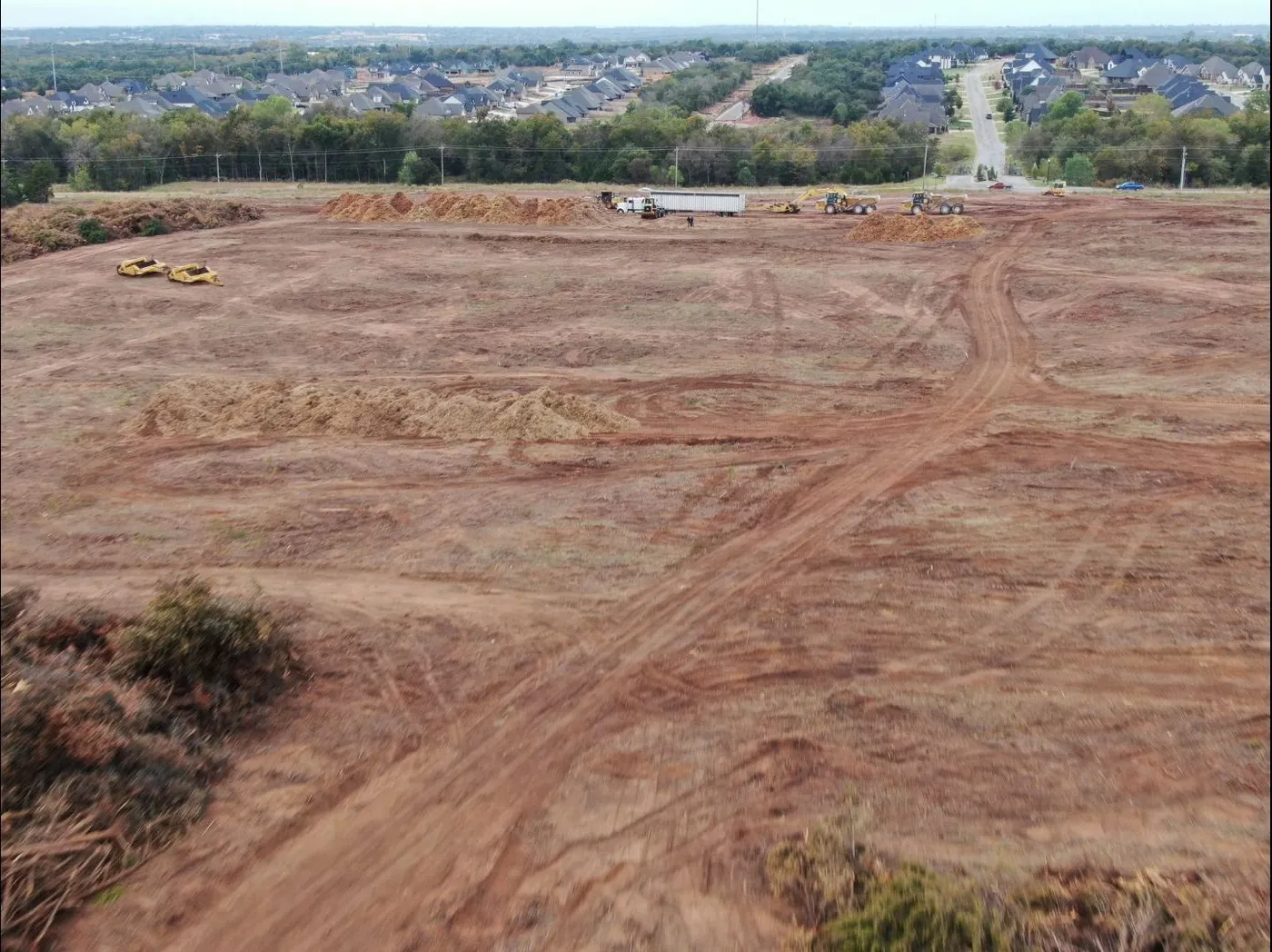
What actually sets the number:
- Acreage and how much of it got hit. Forty acres with damage on six is a six-acre job.
- Volume and size of the downed material. Broken tops and brush are fast. Mature blackjack and post oak on the ground are slow.
- Access. Where equipment can get in, and whether it can loop the property or has to back out the way it came.
- Ground condition. Soft ground means slower work and more repair afterward.
- Grind or haul. The single biggest swing on most storm quotes.
- Root balls and re-grading. How many holes there are to close and how flat you need it left.
Those are the same drivers behind any clearing quote, which is why our write-up on what land clearing costs per acre in Oklahoma is worth reading before you compare bids.
We work Edmond and the rest of Oklahoma County along with the whole OKC metro and about 150 miles out. You can see the full list on our service areas page. If a storm hit your place, call (405) 465-2809 and tell us what is down and what is blocked, and we will tell you honestly whether it needs a machine today or whether it is worth letting the ground dry first. You can also request a free on-site estimate or get in touch here, and we will come walk it with you.